
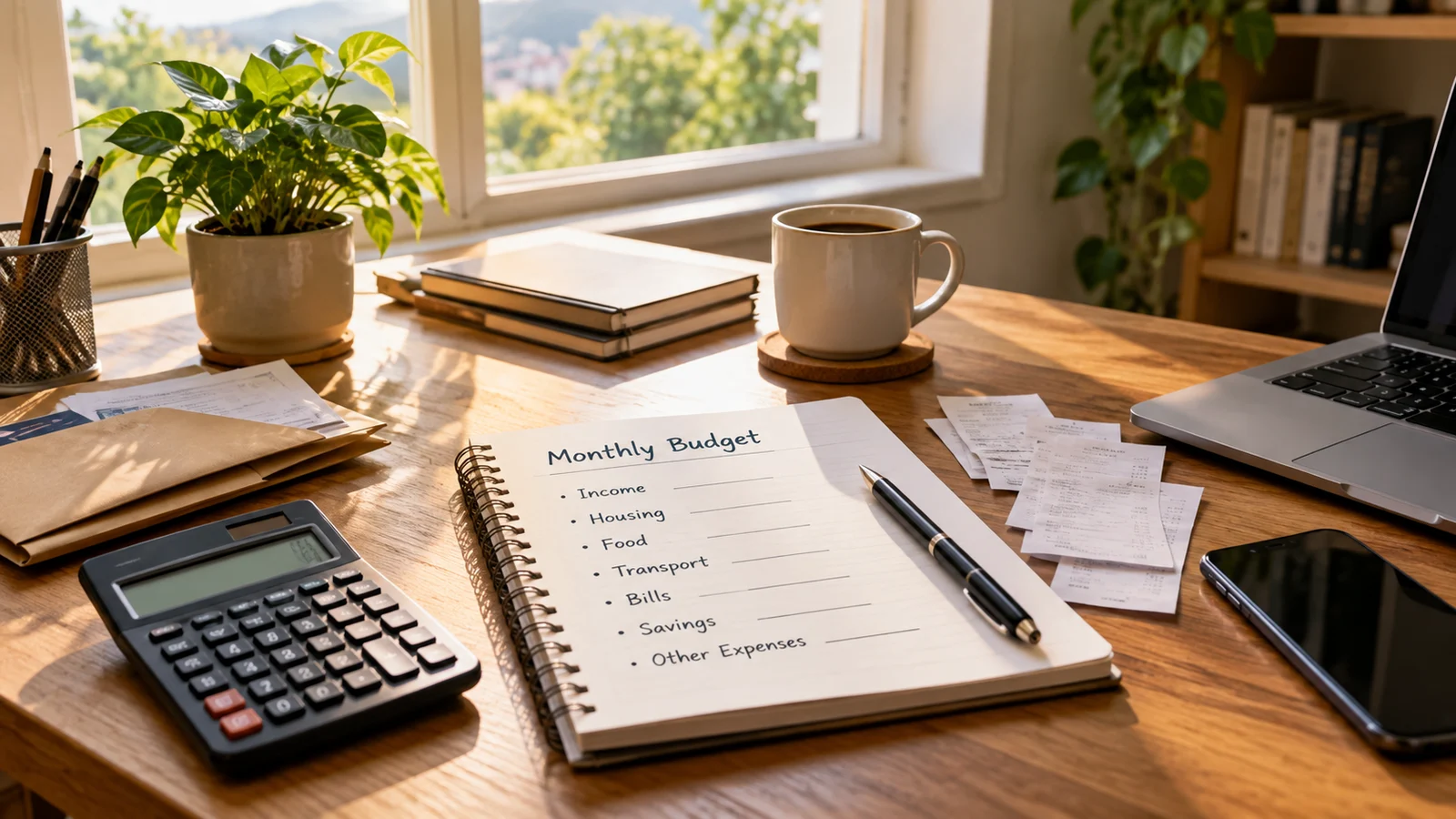
A monthly budget is much more useful when it starts with the money you actually receive rather than an ideal version of your income. Once you know what is coming in, you can look at what is going out, account for the expenses that do not happen every week, and decide what is realistic for the month ahead.
You do not need a complicated spreadsheet to get started. A notebook, spreadsheet or budgeting app can all work. The important part is that the numbers come from your real bills, recent spending and actual income.

1. Start with your actual take-home income
Begin with the money you can realistically use during the month. For a regular salary, that usually means the amount that reaches your account after the deductions that already come out of your pay.
If you have more than one source of income, list each one separately. If your income changes from month to month, do not automatically build the budget around your highest recent month. Looking at several months and using a sensible average can give you a more realistic starting point.
The Consumer.gov budgeting guidance also recommends starting with your income and expenses and comparing the two rather than guessing at a spending target.
2. Write down the bills that are easy to predict
Next, list the expenses you already know are coming. Rent or mortgage, utilities, phone, internet, insurance, loan payments and other regular bills are a good place to start.
Do not worry about making the categories perfect. The goal is to get a clear picture of what has to be paid before you start deciding what is available for everything else.
3. Look at what you actually spent recently
This is the part people often skip. Instead of deciding that you “should” spend a certain amount on food, transport or entertainment, look at recent bank statements, receipts or transaction history and see what really happened.
Small purchases matter here because they are easy to forget when you are building a budget from memory. A few coffees, delivery orders, subscriptions or cash purchases can add up without appearing in your mental version of the month.

4. Do not forget expenses that happen less often
A budget can look comfortable until an annual insurance payment, school expense, medical bill, gift, repair or trip appears. These costs are easy to miss because they do not show up every month.
Look back over several months and note the expenses that happen occasionally. You can then decide how you want to handle them—whether that means setting money aside each month or simply remembering that a particular month will be more expensive.
The Consumer Financial Protection Bureau specifically recommends looking back over several months so less frequent expenses are not left out of the budget.
5. Separate needs, flexible spending and goals
Once the basic numbers are visible, group your spending into a few useful buckets. Essential bills and everyday needs come first. Flexible spending includes things you can adjust when necessary. Savings or other financial goals can then be treated as real parts of the plan rather than whatever happens to be left at the end.
This does not mean every month has to look the same. A month with a birthday, school expense or planned trip may have different priorities from a quiet month.
6. Put bill due dates somewhere you can see them
Total monthly spending is only part of the problem. Timing matters too. If several bills arrive before your next paycheck, knowing their due dates can help you see where the month might become tight.
A simple bill calendar can be enough. Write down the bill, amount and due date, then compare that calendar with when your income arrives. This can make cash-flow problems much easier to spot before they become a surprise.
7. Check the number left after expenses
Now do the basic calculation: income minus planned expenses.
If there is money left, decide where it should go instead of letting it disappear without a plan. It might support a savings goal, an emergency fund, a planned purchase or flexible spending.
If the result is negative, the budget has already done something useful: it has shown you that the current plan does not fit the income. Go back through the flexible categories first and look for changes that are realistic rather than trying to make the numbers look better on paper.
8. Give yourself a small amount of room
A budget that uses every last unit of income can be difficult to follow because real life is rarely that tidy. A small buffer can make the plan more forgiving when a grocery bill is higher than expected or an ordinary household expense appears.
The exact amount depends on your situation. The useful idea is simply to avoid treating every remaining amount as already available to spend.
9. Check the plan against your calendar
Before calling the budget finished, look at the month ahead. Are there birthdays, travel, school payments, appointments, renewals, annual bills or other events you already know about?
Adding known expenses before the month begins is usually easier than discovering them halfway through and wondering why the budget no longer works.
10. Review what happened at the end of the month
The first budget is a starting point, not a test you either pass or fail. At the end of the month, compare what you planned with what actually happened.
If food spending was higher than expected, that is useful information. If a subscription was forgotten, add it next time. If a category consistently has money left over, you may have set the target too high. The next month should be based on what you learned rather than starting from scratch.
A simple monthly budget structure
- Income: record the money you realistically expect to receive.
- Regular bills: list housing, utilities, insurance, debt payments and other recurring commitments.
- Everyday spending: include food, transport, household items and personal spending.
- Less-frequent costs: note annual, seasonal or occasional expenses you expect.
- Savings and goals: include planned contributions instead of treating them as an afterthought.
- Buffer: leave some room for ordinary surprises when possible.
- Review: compare the plan with actual spending and use what you learn next month.
Use real numbers, then make the plan easier to live with
The point of a budget is not to make every purchase feel like a decision. A useful budget gives you a clear picture of what is already committed, what can move around and what you are trying to build toward.
Start with the numbers you can verify, keep the categories simple and update the plan when your circumstances change. That is usually more useful than building a complicated system that takes longer to maintain than your finances do.
For another reference, the Consumer.gov Budget Worksheet provides a straightforward way to list income and expenses. The Consumer Financial Protection Bureau spending guidance also recommends checking recent spending and including less-frequent costs.
Turn the plan into a checklist
This article explains how to build the monthly plan from your actual numbers. The Monthly Budget Checklist turns the process into a shorter set of tasks you can work through.
If the next step is building a financial cushion, use the Emergency Fund Checklist. If debt payments are part of your monthly plan, the Debt Payment Checklist can help organise those tasks, while the Tax Preparation Checklist is useful when you are preparing for tax-related deadlines.