
A home maintenance schedule helps you remember small checks before they become larger jobs. You do not need to inspect everything every weekend. Put a few repeat tasks on a calendar, add seasonal checks that suit your climate, and follow the instructions for your appliances and home systems.
This is a general guide for houses and apartments. Your responsibilities may differ if you rent, live in a managed building, or have equipment that requires specialist servicing. Follow your lease, local safety rules and manufacturer instructions where they apply.

Monthly home maintenance tasks
Choose a regular date each month for a quick walk-through and safety review.
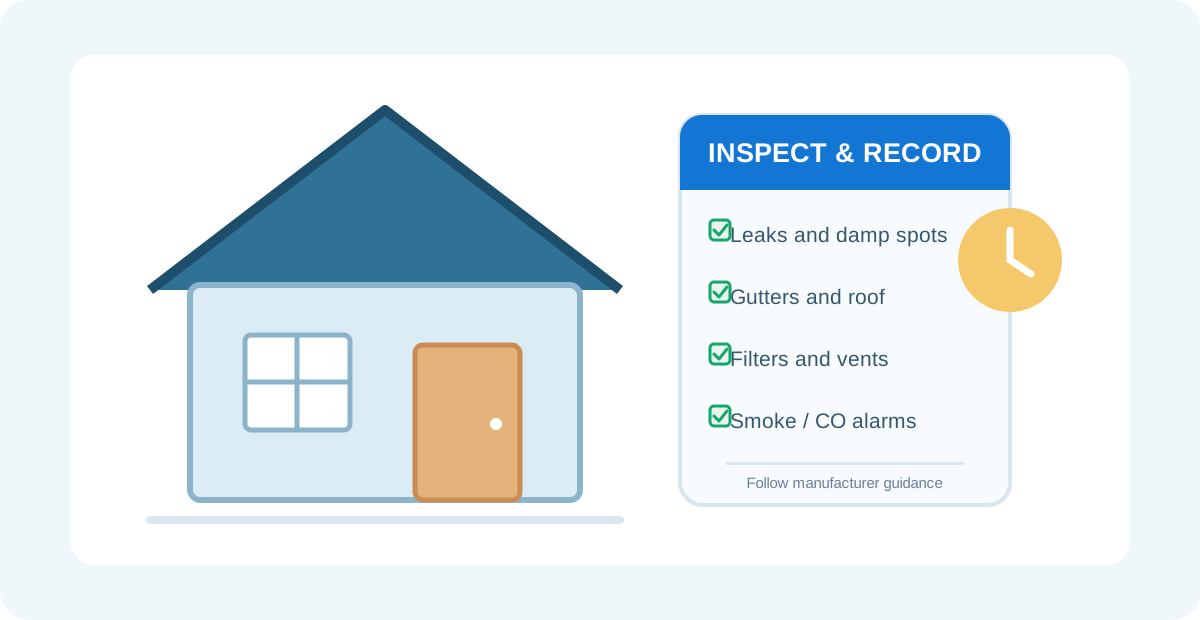
- Test smoke and carbon monoxide alarms according to the device manufacturer’s instructions and local requirements.
- Look for leaks: check under sinks, around visible plumbing, near water heaters and around windows after heavy rain.
- Check drains: notice slow drainage or unusual smells and address minor blockages safely before they worsen.
- Inspect ventilation: keep supply and return vents clear; check whether HVAC filters need cleaning or replacement based on the system guidance and household conditions.
- Look for moisture: check for condensation, damp patches or signs of mould and address the source of moisture.
- Check doors, windows and locks for obvious damage or operation problems.
Some homes need certain checks more often. Do not assume every filter, alarm or appliance follows the same schedule; use its manual.
Spring and warm-weather checks
- Look at accessible gutters and downspouts for blockages after leaves and debris have accumulated.
- Check visible exterior walls, window seals and roof areas from a safe location for damage or water entry.
- Make sure outdoor drains direct water away from the building where designed to do so.
- Prepare cooling equipment for the season and arrange servicing if recommended by the manufacturer.
- Check outdoor taps, hoses and irrigation equipment for leaks when putting them back into use.
- Look for peeling paint, cracked sealant or damaged weather stripping that may need repair.
Do not climb onto a roof or work near overhead electrical lines to complete a checklist. Use a qualified professional for unsafe or hard-to-reach areas.
Autumn and cold-weather checks
- Check heating equipment before you rely on it for the season; arrange professional servicing where the manufacturer recommends it.
- Replace or clean heating-system filters as directed and keep vents unobstructed.
- Check doors and windows for drafts and damaged seals.
- Clear leaves from accessible drains and gutters where safe to do so.
- Protect exposed outdoor plumbing where freezing weather is possible, following local guidance.
- Check that paths, steps and exterior lights are safe for darker or wet conditions.
- If you have a fireplace or chimney, arrange inspection and cleaning as recommended before use.
Annual tasks to plan ahead
- Review the manuals and service records for heating, cooling, water-heating and other major equipment.
- Check the condition and expiry or replacement guidance for smoke alarms, carbon monoxide alarms and fire extinguishers.
- Review visible plumbing, exterior seals, caulking and areas where water could enter.
- Check the location and access to the main water shutoff and, where relevant, other emergency controls.
- Review home insurance details, emergency contacts and records of completed repairs.
- Plan qualified inspections or maintenance required for your specific systems and local conditions.
Annual does not mean every task is due exactly once a year. Some equipment has shorter or longer service intervals. The manufacturer’s schedule and local rules take priority.
A simple maintenance tracker
Keep the record short enough that you will use it. For each task, note:
- Task: what you checked or serviced.
- Date: when it was completed.
- Finding: normal, needs monitoring or needs repair.
- Next action: the repair, replacement or follow-up required.
- Receipt or manual: where the supporting record is stored.
If you live in a rental, report maintenance issues through the landlord or property manager’s stated process and keep a copy of the message. Do not carry out work that you are not authorised or qualified to do.
Which jobs should you leave to a professional?
Use a qualified professional for work involving gas, electrical systems, structural concerns, roof access, major plumbing faults or equipment that requires specialist servicing. If you smell gas, suspect carbon monoxide, see sparks or face an immediate safety risk, leave the area if needed and contact the appropriate local emergency or utility service. A maintenance calendar is not a substitute for urgent help.
Home maintenance schedule at a glance
- Monthly: test alarms as directed, look for leaks and moisture, review vents and filters
- Spring / warm season: inspect visible exterior areas, drainage and cooling equipment
- Autumn / cold season: prepare heating, check seals and clear safe-to-reach drains
- Annually: review service records, emergency controls and equipment replacement guidance
- Whenever something changes: record leaks, unusual noises, damage or equipment warnings
Use the Home Maintenance Checklist to track the tasks themselves. The Home Cleaning Checklist covers routine cleaning, which is useful alongside maintenance but is not the same as inspecting and servicing home systems.
Trusted maintenance guidance
For a useful starting point, see Freddie Mac’s home maintenance checklist for monthly and seasonal examples, and the Country Fire Authority’s smoke-alarm maintenance guidance. Alarm rules, climate needs and building responsibilities vary by location, so confirm the instructions that apply to your home.